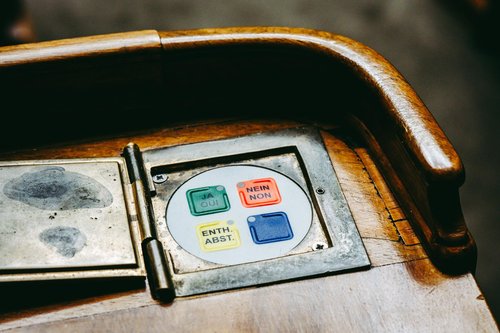
Bern, Switzerland — March 8, 2026 — In a clear rejection of economic populism, Swiss voters have decided to maintain the annual licence fee for their national broadcaster at 335 Swiss francs, sending a powerful message about the value of independent, multi-lingual public media in an increasingly fragmented digital landscape.
The referendum, which went to the polls on Sunday, August 8, 2026, pitted the Swiss Broadcasting Corporation (SBC) against a right-wing initiative from the Swiss People's Party (SVP/UDC) that sought to reduce the licence fee from 335 francs to just 200 francs annually. While the fee would still remain higher than in neighbouring Germany (£190) and Austria (£160), the proposal promised a substantial reduction of over 40%.
The Case for Cuts: Economic Populism or Real Reform?
The right-wing campaign was built on economic populism. Manfred Bühler, a member of parliament for the Swiss People's Party, argued that television production in the 21st century costs much less than three decades ago. "Two hundred francs really is enough," he told Swiss media, reflecting a broader sentiment that public television services can be produced more cheaply than ever before.
The timing of the referendum could not have been worse. Swiss households are grappling with persistent cost-of-living pressures, with inflation concerns still lingering. The party's argument resonated with many voters struggling to balance competing demands: housing, food, childcare and energy bills.
What Would the Cuts Have Meant?
Opponents of the cut highlighted the far-reaching consequences that would have followed. According to the Swiss Broadcasting Corporation (SBC), hundreds of jobs would have been lost across the broadcaster's operations. This would have struck at the heart of Switzerland's unique media ecosystem.
"As a neutral country we have a unique perspective on the world, and only our correspondents can bring that back home to people,"
explained Fabian Molina, a Social Democratic member of parliament, who fears that cuts to the licence fee would undermine Switzerland's "national cohesion".
The SBC maintains a network of foreign correspondents in the US, Russia, China, the Middle East, Latin America, Brussels, Berlin, Paris, Rome and London. This international footprint ensures that Swiss citizens receive news and analysis from a genuinely neutral perspective, free from the bias that can afflict private news outlets.
The Four Languages of Switzerland
The licence fee is essential for ensuring that all four of Switzerland's languages—German, French, Italian and Romantsch—are equally represented in the national media landscape. Each language community has its own radio and television channels, with national and local news broadcast daily.
This multilingual commitment distinguishes Switzerland from its neighbours. In the UK, for example, top league football has switched to private broadcasters requiring subscription fees. Yet the SBC still broadcasts the UEFA Champions League, as well as all the winter sports at which the Swiss excel—skiing, ice hockey, curling and alpine skiing.
"Much of the licence fee goes on ensuring all four of Switzerland's languages are represented. All four have their own radio and television channels, and each broadcasts national and local news daily,"
stressed Fabian Molina, who warned of the broader democratic implications of the cuts.
The Vote: A Mandate for Public Service Media
The final vote resulted in a decisive rejection of the fee-cut proposal. While the Swiss People's Party maintained its position that the current cost was unjustified, the broader electorate chose instead to uphold the value of their national broadcaster.
Industry observers point to several factors that may have contributed to the outcome. First, the intervention of major political figures from across the spectrum, including left-wing and centrist parties, mobilised voters concerned about media independence. Second, the Swiss Broadcasting Corporation's warning of hundreds of job losses proved emotionally resonant for a population that prizes security and stability.
"Swiss voters go to the polls this weekend to decide whether to reduce sharply the annual licence fee for their national broadcaster,"
reported BBC News, noting the close nature of the campaign ahead of the vote.
The broadcaster's retention of Champions League and winter sports rights, unlike the UK where such rights have migrated to private platforms, underscored the unique role of public service television in Switzerland. Citizens can still watch top-tier football and winter sports without subscription fees, a benefit that resonates in a country where such sports are deeply embedded in national culture.
What This Means for Public Broadcasting
The vote sends a clear signal that Swiss voters value their national broadcaster despite its relatively high fee compared to European neighbours. In an age where digital streaming services like Netflix, Disney+ and other platforms offer competing entertainment options, the public broadcaster's role as a guarantor of democratic discourse and cultural cohesion becomes even more critical.
The decision also reflects Switzerland's commitment to media pluralism and the belief that public service media should remain independent from commercial interests. This stance aligns with similar debates across Europe, where public broadcasters from Germany's ARD/ZDF to France's France Télévisions face increasing pressure to defend their value propositions in the digital age.
The Swiss Broadcasting Corporation's network of international correspondents will continue to provide neutral, balanced reporting from around the world. This unique capability, maintained through the licence fee, ensures that Swiss citizens can access diverse perspectives without the filter of commercial interests or algorithmic bias.
Looking Ahead
While the licence fee remains at 335 francs for 2026, the political debate will likely continue. The Swiss People's Party has already indicated that they will pursue additional initiatives aimed at reducing what they consider "unjustified" public spending. However, the referendum result has given opponents of the cuts a significant mandate to defend the public broadcaster's budget.
For now, Swiss households can continue to enjoy their national broadcaster across all four languages, with access to Champions League football, winter sports and international news without additional subscription fees. In a world increasingly fractured by information echo chambers, that choice—to support independent, multi-lingual public media—is both sensible and necessary.
The Swiss referendum has demonstrated that voters still value the old-fashioned virtues of public service broadcasting: independence, integrity and a commitment to truth across the political spectrum. As the digital transformation accelerates, this mandate will provide the broadcaster with political cover to invest in innovation while maintaining its core mission.