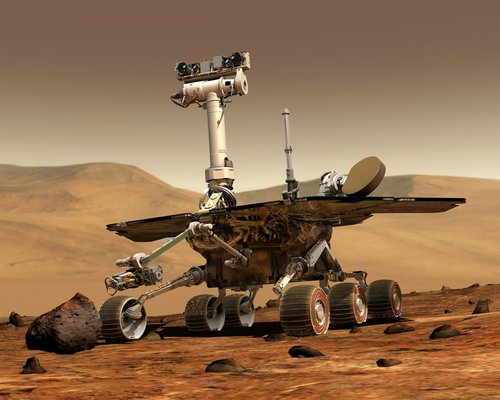
SpaceX is making history. The ambitious plan to send humanity to Mars is moving closer to reality, with a launch date set for late 2026.
In a startling revelation, SpaceX founder Elon Musk has announced that his company will attempt to reach Mars by the end of 2026. This milestone would mark the first time a private enterprise successfully sends a spacecraft to another planet in history.
"The 2026 deadline isn't just ambitious — it may be the only option," Musk stated during recent remarks. With a rare planetary window approaching, SpaceX is moving quickly to position its revolutionary Starship rocket for this unprecedented mission.
The Starship Rocket Takes Center Stage
The proposed uncrewed Mars mission coincides with SpaceX's fourth fully integrated test flight of the Starship. Recent test flights have proven the rocket's capabilities, even as the company faces several flight explosions that require careful investigation. The upcoming Mars mission will carry Tesla's humanoid robot, Optimus, which was shown to the public last year.
"SpaceX is moving quickly to position its Starship rocket for a potential uncrewed mission to Mars as early as late 2026."
NASA's Competing Lunar Agenda
While SpaceX looks toward Mars, NASA has undergone significant changes to its Artemis lunar program. The space agency recently added an extra mission to its Artemis program and updated its architecture, redirecting resources away from the originally planned 2027 moon landing.
This strategic shift includes postponing Artemis III to 2028, as officials now opt for an additional crewed test flight before attempting a landing. The race between SpaceX's Mars ambitions and NASA's lunar program highlights the accelerating pace of space exploration in the coming decade.
A New Era of Space Exploration
Whether through SpaceX's Mars ambitions or NASA's strengthened Artemis program, humanity's presence beyond Earth's atmosphere is rapidly expanding. The success of a 2026 Mars mission would not only represent a technical triumph but could fundamentally reshape our understanding of human potential in space.
As SpaceX continues its rapid pace of development, one thing remains certain: the golden age of space exploration has arrived.