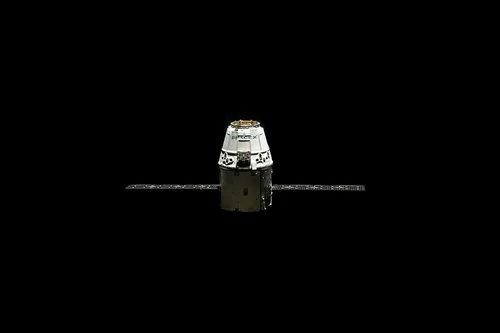
SpaceX Sets New Benchmark in Space Technology
In a breathtaking display of engineering prowess, SpaceX successfully launched its 600th Starlink satellite for the year 2026 during a pre-dawn launch from Cape Canaveral Space Force Station. The mission, designated Starlink 10-40, carried 29 broadband internet satellites into low Earth orbit, marking another historic milestone in Elon Musk's ambitious plan to provide universal internet coverage.
The Falcon 9 rocket, bearing the tail number B1080, lifted off at precisely 5:52:20 a.m. EST (10:52:20 UTC) from Space Launch Complex 40. This particular booster had completed its 25th flight, having previously supported private astronaut missions for Axiom Space and resupply missions for Northrop Grumman and NASA.
The Landing: 145th Time for 'A Shortfall of Gravitas'
Nearly 8.5 minutes after liftoff, the Falcon 9 first stage executed a perfect landing on the drone ship 'A Shortfall of Gravitas,' positioned in the Atlantic Ocean off the coast of South Carolina. This landing represented SpaceX's 145th touchdown on this specific vessel and the 581st booster landing to date in the company's storied history of reusable rocket development.
The Growing Starlink Constellation
SpaceX's Starlink program has evolved from a controversial concept into one of the world's most successful commercial satellite internet initiatives. With 600 satellites now deployed across the constellation, the network continues to expand coverage in remote areas while connecting previously underserved communities to high-speed internet.
Industry analysts estimate that the growing constellation could eventually provide internet coverage to nearly all of Earth's surface within low Earth orbit. The 2026 launch cadence—averaging dozens of satellites per month—demonstrates SpaceX's commitment to maintaining orbital dominance while pushing the boundaries of sustainable space operations.
The Road Ahead
Following this successful launch, SpaceX has another Falcon 9 launch scheduled for mid-afternoon from Vandenberg Space Force Base, further cementing its position as the world's leading commercial spaceflight provider. The company's continued investment in reusable rocket technology is helping to dramatically reduce the cost of launching payloads into orbit, enabling new missions in telecommunications, Earth observation, and potentially deep space exploration.
"We've got to get back to basics," said NASA officials earlier this month, highlighting the importance of mastering fundamental rocketry capabilities as the company prepares for future Artemis moon missions. SpaceX's achievements in Starlink represent a crucial piece of this larger vision for sustained human spaceflight.
As we move through March 2026, the space race is evolving from a geopolitical contest into a commercial reality, with private companies like SpaceX leading the way in making space more accessible and affordable for the global population.