SpaceX Reaches Historic Milestone: 600th Starlink Satellite Launched
SpaceX has achieved a remarkable milestone in the rapidly expanding commercial space industry with the launch of its 600th Starlink satellite during a pre-dawn Falcon 9 rocket flight from Cape Canaveral Space Force Station on March 3, 2026. This launch marks a significant achievement in the company's ambitious mission to provide global broadband internet coverage through a massive constellation of low Earth orbit satellites.
The Launch Details
Space Flight Now reported that the Falcon 9 first stage booster, designated B1080, lifted off from Space Launch Complex 40 (SLC-40) at 5:52:20 a.m. EST on Wednesday morning. The mission successfully deployed 29 broadband internet satellites into low Earth orbit, bringing the total Starlink constellation to another major threshold.
"The 45th Weather Squadron forecast a 90 percent chance for favorable weather during the launch window."
Nearly 8.5 minutes after liftoff, the B1080 booster successfully landed on the drone ship named "A Shortfall of Gravitas," positioned in the Atlantic Ocean off the coast of South Carolina. This landing marked the 145th recovery on this vessel and the 581st booster landing in SpaceX's history.
Boost Reusability: The 25th Flight
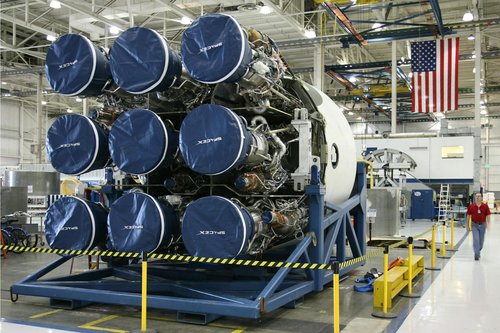
SpaceX continued to demonstrate its advanced rocket reusability technology with this mission. The B1080 booster was launched for its 25th flight after previously supporting two private astronaut missions for Axiom Space, an NG-21 mission for Northrop Grumman, and a CRS-30 cargo resupply mission for NASA. This reusability achievement represents a revolutionary approach to space launch costs and frequency.
The Broader Context of SpaceX's 2026 Launches
According to SpaceFlight Now's news archive, SpaceX launched a total of 290 Starlink satellites in 2026 through multiple Falcon 9 missions. The company's relentless pace of launches has transformed the commercial space sector, with the 600th satellite of the year being just one of many achievements in what has become an unprecedented expansion of orbital infrastructure.
Recent launches included 500th Starlink satellite deployment on February 25, 2026, with additional launches on February 27, March 1, and multiple launches planned through the remainder of 2026. This sustained launch cadence underscores SpaceX's dominance in commercial satellite deployment and orbital manufacturing capabilities.
Strategic Implications for the Space Economy
Commercial internet through low Earth orbit satellites represents one of the fastest-growing sectors in the space economy. With 600 satellites successfully deployed in 2026 alone, SpaceX has demonstrated that the Starlink constellation can scale rapidly while maintaining operational excellence and launch reusability.
The success of these deployments has implications for global internet connectivity, particularly in underserved regions, while also raising important regulatory questions about orbital sustainability and satellite spectrum management. As space becomes increasingly crowded with commercial satellites, industry leaders must navigate complex regulatory frameworks to ensure responsible orbital operations.
Looking Ahead: The Road to 700
With 600 satellites deployed in 2026, SpaceX appears on track to deploy its 700th Starlink satellite of the year by mid-to-late summer 2026, maintaining the aggressive launch schedule established by founder Elon Musk. The company has consistently demonstrated that high-frequency, high-volume satellite deployment is achievable without compromising on mission reliability or booster recovery rates.
This milestone not only represents SpaceX's technological prowess but also signals a fundamental transformation in how humanity approaches space-based infrastructure. The commercialization of space has moved beyond theoretical discussions into practical implementation, with satellite internet becoming a commercially viable alternative to traditional ground-based infrastructure in remote and rural areas globally.