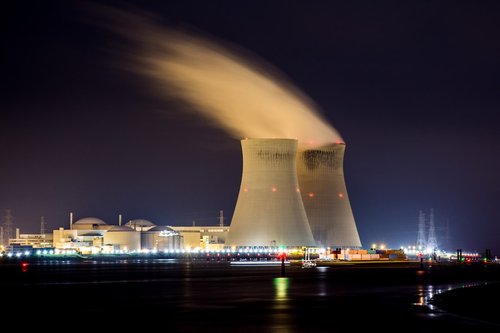
Nuclear Renaissance: Next-Generation Reactors Power the 2026 Energy Transition
As climate concerns mount globally, MIT Technology Review has unveiled a revolutionary list of breakthrough technologies for 2026, with next-generation nuclear reactors taking center stage. These advanced power systems promise to redefine the energy landscape, offering clean, safe, and affordable electricity to replace fossil fuels across the world.
"Nuclear power already provides steady electricity to grids around the world, without producing any greenhouse-gas emissions. New designs rely on alternative fuels and cooling systems or take up less space, which could get more reactors online faster," explains MIT Technology Review.
The Promise of Small Modular Reactors
Commercial nuclear reactors all work pretty much the same way—at radioactive material splits, emitting neutrons that cause chain reactions. Today's reactors use uranium fuel and water coolant, but they are massive, expensive, and slow to build. China's Linglong One, the world's first land-based commercial small modular reactor, should come online in 2026. Construction crews installed the core module in August 2023.
Every nuclear power plant built today is basically bespoke, designed for a specific site. But small modular reactors (SMRs) could bring the assembly line to nuclear reactor development. By making projects smaller, companies could build more of them, and costs could come down as the process is standardized. The reactor core can be just two meters tall, making them easier to install—and because they are modular, builders can put as many as they need or can fit on a site.
Revolutionary Technologies
MIT Technology Review has identified ten breakthrough technologies that will define 2026:
- Sodium-ion batteries—made from abundant materials like salt, emerging as a cheaper, safer alternative to lithium
- Generative coding—AI coding tools revolutionizing how we write, test, and deploy code
- Next-generation nuclear reactors—from molten salt to TRISO fuel, new designs relying on alternative fuels
- AI companions—chatbots forming personal bonds, raising safety concerns
- Base-edited babies—the first gene-editing treatment in a seven-month-old infant
- Gene resurrection—information on extinct creatures offering new treatments and climate solutions
- Mechanistic interpretability—research techniques giving us the best glimpse into AI black boxes
- Commercial space stations—paying customers checking into a room with a galactic view
- Embryo scoring—screening embryos for genetic diseases with new claims about trait prediction
- Hyperscale AI data centers—power-hungry behemoths pushing infrastructure to its limits
The article notes: "The race for AI supremacy has supercharged data centers. Hyperscale AI data centers pack powerful computer chips into synchronized clusters that work like giant, high-speed supercomputers—sizzling hot, power-hungry behemoths pushing infrastructure to its limits."
Nuclear power could play a crucial role in this transition. "New designs rely on alternative fuels and cooling systems or take up less space, which could get more reactors online faster," explains MIT Technology Review. As rising temperatures and growing economies bring more air conditioners online, and the AI boom brings more data centers, nuclear could help provide steady electricity without greenhouse emissions.
"Demand for electricity is swelling around the world. Rising temperatures and growing economies are bringing more air conditioners online. Efforts to modernize manufacturing and cut climate pollution are changing heavy industry. The AI boom is bringing more power-hungry data centers online. Nuclear could help, but only if new plants are safe, reliable, cheap, and able to come online quickly," notes the review.
Looking Ahead
As we face unprecedented challenges in energy, AI, biotechnology, and space, these breakthrough technologies promise to shape the next decade. From sodium-ion batteries promising to power affordable electric vehicles, to next-generation nuclear reactors that could help replace fossil fuels, 2026 marks a pivotal year for human innovation.