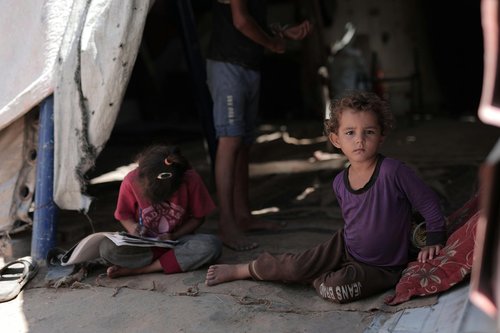
Devastating Blow to Innocent Civilians: The Minab School Attack
On the fourth day of escalating violence in the Middle East, the United Nations has issued an urgent call for the protection of civilians, condemning a horrific strike that reportedly killed and injured dozens of young girls at a primary school in Minab, southern Iran. The attack has become one of the most harrowing images of this conflict—backpacks with bloodstains marking the beginning of a school day, according to UN human rights office spokesperson Ravina Shamdasani.
UN Officials Demand Accountability
UN human rights chief Volker Türk has expressed deep shock at the impacts of hostilities on civilian populations and infrastructure. Speaking to the media, Ms. Shamdasani emphasized that such attacks against civilians or civilian objects constitute "serious violations of international humanitarian law" and may amount to war crimes.
"Children, little girls… at the beginning of the school day being killed in this manner, backpacks with bloodstains on them - this is absolutely horrific," she said. "If there is any image that captures the essence of the destruction, despair and senselessness and cruelty of this conflict, those are the images."
The Blackout in Tehran
While the strikes continue, Iran has imposed a nationwide internet shutdown. The Office of the High Commissioner for Human Rights (OHCHR) expressed concern for the welfare of Iranians, noting the government's pattern of using lethal force against dissent and threatening any expression of opposition. Fundamental freedoms remain severely compromised as information access is restricted.
Lebanon Faces Humanitarian Nightmare
The conflict has rippled across the region, with Lebanon emerging as another epicenter of humanitarian distress. UNHCR spokesperson Babar Baloch reported that heavy displacement has occurred across southern Lebanon, the Bekaa Valley, and southern suburbs of Beirut. Israel has issued evacuation warnings to residents of more than 53 villages and conducted extensive airstrikes across the nation.
As of Monday, conservative estimates indicate nearly 30,000 people are sheltered in collective accommodations, with thousands more sleeping in vehicles along roads or caught in traffic jams while fleeing south toward Beirut.
"Many of the countries affected by the new conflict already host millions of refugees and internally displaced people. Further violence and displacement risk overwhelming host communities' capacities," warned the UNHCR spokesperson.
Global Supply Chains Under Siege
Severe disruptions to transport and trade routes are affecting humanitarian operations worldwide. Samer Abdel Jaber, Regional Director for the Middle East and North Africa at the UN World Food Programme, highlighted the disruption in the Strait of Hormuz and Red Sea, which complicates maritime routes essential for food and medical supplies.
"With seas contested and airspace closing, we're adapting and using our supplier networks in other countries like Türkiye, like Egypt, like Jordan and Pakistan to support overland corridors," he stated. While Egypt's ports and the Suez Canal remain functional, the crisis has driven up costs and delayed deliveries across the region.
Israel's decision to close border crossings to Gaza since the conflict erupted has raised concerns, though there has been some relief following reports of an imminent reopening of the Kerem Shalom crossing.
A Regional Crisis Demanding Global Attention
With hostilities impacting 12+ countries besides Iran and Israel, the UN has warned that the crisis threatens to overwhelm already-stressed host communities. The combination of civilian casualties, displacement, and humanitarian infrastructure damage requires prompt, impartial investigation and accountability. The world watches, waiting for the leaders behind these strikes to make public their findings and ensure redress for victims.