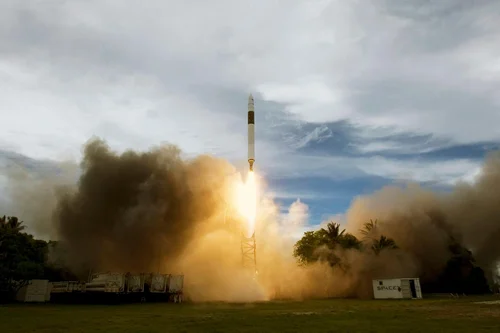
As 2026 dawned, the world stood at the precipice of an unprecedented energy transformation. What was once the domain of science fiction—clean, abundant, and virtually limitless power—has suddenly become the present reality. From the photovoltaic labs of Seville to fusion reactors in Nevada, groundbreaking technologies are finally leaving the academic realm to reshape global energy infrastructure.
Revolutionizing Photovoltaics: The Perovskite Breakthrough
At the Institute of Materials Science and Technology (ICMS) in Seville, Spain, researchers have achieved something extraordinary. They developed a hybrid perovskite solar cell that simultaneously harnesses sunlight and raindrop impacts to generate electricity. This dual-energy harvesting system combines photovoltaic and triboelectric effects in a single device.
"Our key innovation is a fluorinated polymer layer, known as a CFₓ layer, which performs multiple functions,"
The fluorinated CFₓ polymer layer encapsulates and protects the perovskite layer from moisture, increases surface hydrophobicity, and exhibits triboelectric properties. Most impressively, it maintains optical transparency exceeding 90%—ensuring the photovoltaic performance remains uncompromised.
The best cells achieved an efficiency of 17.9%, rivaling traditional silicon-based solar panels. For triboelectric energy generation, one variant reached open-circuit voltages of up to 110 volts. When combined in a hybrid setup, the system achieved a short-circuit current density of 11.6 mA/m² at 0.5 suns of illumination.
Batteries Beyond Lithium
The energy storage landscape is undergoing a parallel revolution. Solid-state batteries are emerging with solid, non-flammable electrolyte materials, improving safety and allowing higher energy-density materials like lithium metal anodes. These innovations promise greater range for electric vehicles and more resilient grid-scale energy storage.
Alternative chemistries like sodium-ion and potassium-ion batteries offer lower costs and reduced reliance on scarce materials like lithium and cobalt—critical for making clean energy accessible globally.
Fusion Energy: The Long-Awaited Dream
Perhaps the most ambitious breakthrough, fusion energy is finally moving beyond theoretical physics into practical application. The long-sought quest for commercially viable fusion power has reached a critical juncture, with major international collaborations converging toward net-positive energy output.
These innovations are not isolated scientific curiosities. They represent a coordinated technological ecosystem designed to address humanity's urgent energy challenges. As the World Economic Forum noted, "These breakthrough technologies mark a pivotal moment where clean energy transitions from aspiration to inevitability."
"2026 is not just a year—it's an inflection point. The technologies we thought would take decades to mature are now scaling rapidly,"
The implications ripple through every sector. Transportation, agriculture, and manufacturing can all benefit from this new energy infrastructure. Grid operators are preparing for variable renewable sources supplemented by solid-state storage. Industrial consumers are anticipating dramatically reduced electricity costs.
The Path Forward
Whether these concepts can be scaled beyond laboratory prototypes remains the central challenge. The hybrid perovskite solar cell demonstrator successfully charged a supercapacitor and enabled continuous operation of a red LED strip—a modest proof of concept that opens vast possibilities.
The work is funded through the 3DScavengers project (European Research Council Starting Grant) and the Drop Ener project (Next Generation Fund). Researchers published their findings in "Water-resistant hybrid perovskite solar cell – drop triboelectric energy harvester", marking another chapter in the ongoing energy revolution.
As 2026 unfolds, the question is no longer whether we can achieve abundant, clean power, but how quickly we can deploy these technologies to meet global energy demands. The laboratory is no longer a safe distance away—the future has arrived.