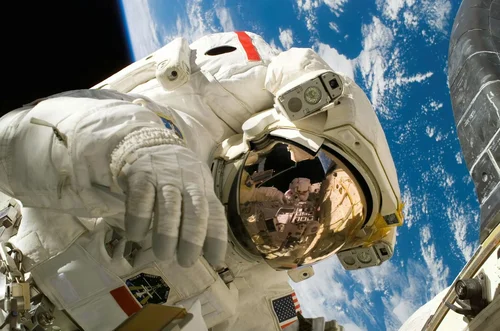
2026 marks a pivotal year in humanity's journey to the stars. As astronauts prepare for their first crewed flight around the Moon since the Apollo era, 2026 is set to become the year of cosmic exploration.
Mapping the Cosmos at Unprecedented Scales
One of the most ambitious undertakings of 2026 involves mapping the universe on the largest possible scales. NASA's Nancy Grace Roman Space Telescope will reach completion, while China's Xuntian space telescope begins operations. These flagship missions are designed to survey billions of galaxies, revealing how planets and galaxies formed and laying groundwork for humanity's return to the Moon later in the decade.
The Artemis II Mission: First Steps Beyond Low Earth Orbit
NASA's Artemis II mission represents a historic milestone in human spaceflight. After years of delays, the mission will finally see astronauts Christina Koch and Jeremy Hansen embark on their journey around the Moon. This mission, powered by the SpaceX Starship vehicle, signals a renewed global push toward sustainable human exploration beyond Earth orbit.
Global Competition and Cooperation
While nations compete in the space domain, cooperation remains a defining feature of 2026's space activities. Japan's Martian Moons eXploration mission will study both Mars's small moons — Phobos and Deimos — collecting samples to bring back to Earth. Meanwhile, India's Gaganyaan program advances its crewed spacecraft development alongside China's ongoing crewed space station missions.
"2026 will be a turning point in how humanity studies the universe," says Grant Tremblay, Federal Astrophysicist at the Smithsonian Institution. "These launches mark a new era of global cooperation and competition beyond Earth." — The Conversation
The Origin and Geology of Moon and Mars
Another set of 2026 missions focuses on understanding how rocky worlds came to be. Scientists are using this decade to finally answer the age-old question: did Mars's moons originate as captured asteroids or debris from a giant impact with Mars? Japan's MMX mission will provide answers that could reshape our understanding of our solar system's formation.
Meanwhile, multiple nations are launching missions aimed at finding water on the Moon and clues to how our solar system formed. From the Lunar Moons eXploration mission to asteroid sample return missions, 2026 represents a watershed moment in space exploration.
Commercial Spaceflight Takes Center Stage
Meanwhile, NASA and other agencies are increasingly relying on commercial spacecraft to carry astronauts to and from the International Space Station. This shift allows agencies to focus their human spaceflight efforts on deep-space missions, freeing resources for ambitious lunar and Mars exploration programs.
Space Weather and Astronaut Safety
As humanity ventures further into space, concerns about space weather and radiation protection grow. Safeguarding astronauts and spacecraft against solar storms becomes increasingly important. Experts call for upgrades to space weather forecasting systems to protect future Artemis astronauts and ensure mission success.
A New Era of Discovery
As the world watches, 2026 signals a new era in space exploration. Powerful new telescopes survey the cosmos at unprecedented scales. Nations cooperate and compete to advance humanity's knowledge of the universe. Together, these launches mark a turning point in how humanity studies the stars — and how nations cooperate and compete beyond Earth.